
Using Myself as a Model
I used myself as a model a lot

I used myself as a model a lot—maybe too much. It wasn’t because I was vain. In the middle of the night, when no one else is around, I’m always available. I don’t cancel, and I don’t need to be scheduled. On top of that, I work for free. Another advantage of using myself as a model is that I’m unconstrained by embarrassment. I’m willing to pose in my underpants or contort my face into a particularly zany expression, things I’d hesitate to ask of a professional model to do. When a pose is especially difficult, it is often easier to just do it myself rather than spend time trying to explain or wrangle someone else into position.
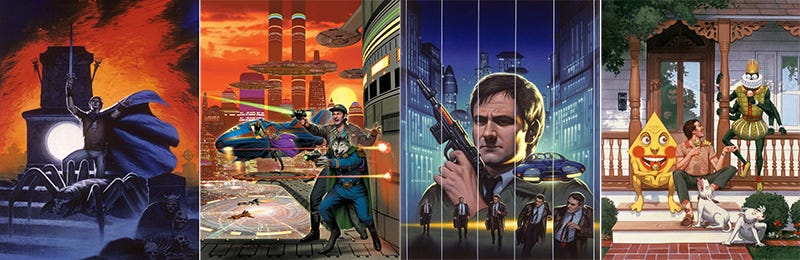
Mattingly
A lot of artists have used themselves as a model.
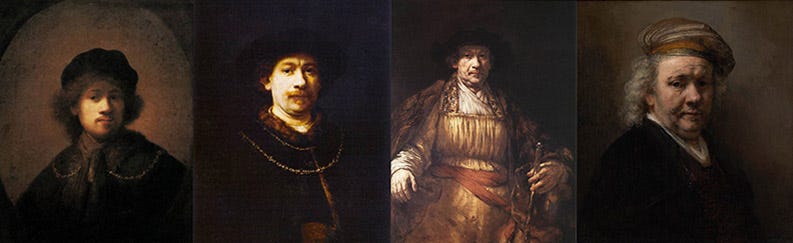
Rembrandt
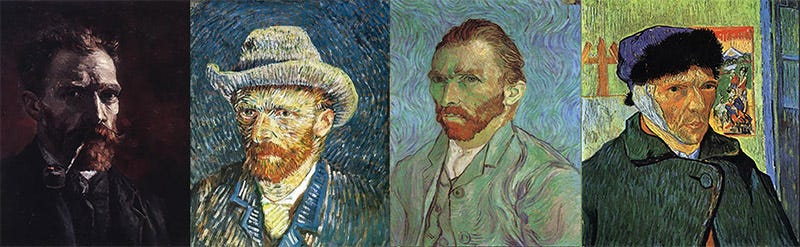
Van Gogh
I’m not comparing myself to Rembrandt or van Gogh (I wish) but they did use themselves as models quite a bit. It’s more a matter of practicality than ego.
Boris used himself as a model a lot, though I’ve always suspected that if I had been built like Boris, I might have used myself even more. He had the advantage of already looking like he stepped out of one of his own paintings.
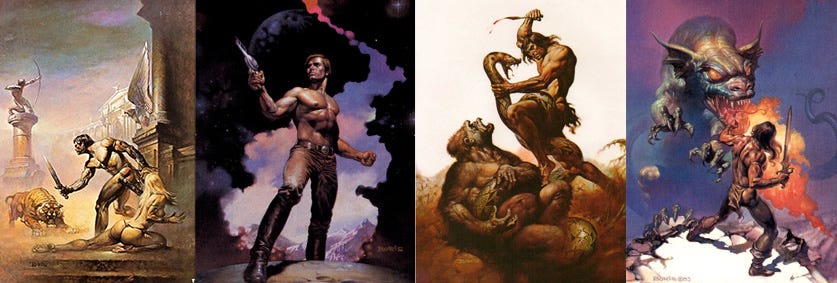
Boris
In the 1980s, when I moved to New York City, publishers were still paying modeling fees and covering the cost of professional photography. For a working artist, that made a remarkable difference. It meant I could look through modeling books and find exactly the right person whose presence matched the character in my head before I ever put brush to canvas. The tradeoff, of course, was logistics. I live in Hoboken, so every shoot meant traveling into the city, coordinating schedules, and navigating all the practical complications of working with models and a photography studio.
The simplest solution to a modeling problem was to use myself. The downside was equally obvious as I am not a model. Some of the people I worked with were otherworldly beautiful, which is probably why they became models in the first place. I once told the story of how the women in my photographer’s studio practically swooned when Fabio walked in the door. He was a very good-looking guy.
I ended up using myself so often on my Del Rey covers that the art director, Don Munson, asked me to stop. If my sense of self-worth had been based on how I looked, that would have been a rather difficult conversation.
In those days, there was still a tangible infrastructure supporting that kind of work with modeling fees and photography paid for. Over time, those budgets have largely disappeared, and many publishers no longer pay for photo shoots. There is tremendous downward pressure on budgets, and one of the first areas to be cut is reference.
Today, artificial intelligence makes it possible to generate figures and models from a home computer. It is efficient, and in some cases convincing, but it is not the same as standing in a room with a real person. Something essential is lost in that substitution, the unpredictability, the spark that comes from working with another human being. I suspect filmmakers will face the same pressure to replace live actors with AI generated performers. I can’t help thinking that something fundamental would be lost there as well. The presence of a skilled actor inhabiting a role brings a kind of alchemy that cannot be easily replicated. There was nothing quite like having the right person pose for a cover.
You can buy signed prints of all of my covers, even the ones I posed for, here:
www.davidmattingly.com