
The Work Should Speak First
If it needs an explanation, it didn’t work

I’ve never been drawn to work that requires knowing the story behind it in order to appreciate it. My wife and I went to a Jeff Koons exhibition at the Whitney Museum of American Art, and many of the pieces came with elaborate explanations about how difficult they were to produce. Frankly, I don’t care what an artist went through to make a piece. What matters to me is whether it succeeds as a work of art. For me, Koons doesn’t pass that test. That said, he’s made millions, so clearly I’m out of step with the broader art-buying public, and I doubt he’s losing sleep over my opinion.

Art?
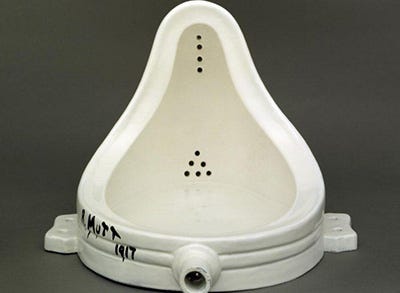
In much contemporary art, the object is intentionally incomplete without context. The label isn’t just helpful, it’s part of the work. That shift begins with Marcel Duchamp. When he presents a urinal as art, the idea displaces the visual experience.
With Edward Hopper, you don’t need a wall label to feel the isolation in a diner or a room. His paintings deliver their meaning by looking at them. A work of art should justify itself through the experience it provides, not through an explanation of how or why it was made.
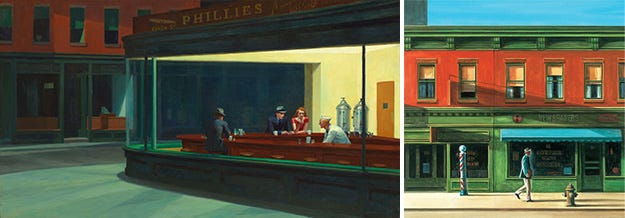
With someone like Rembrandt or Edward Hopper, you don’t need to be told how to feel, and the longer you look, the more you see.
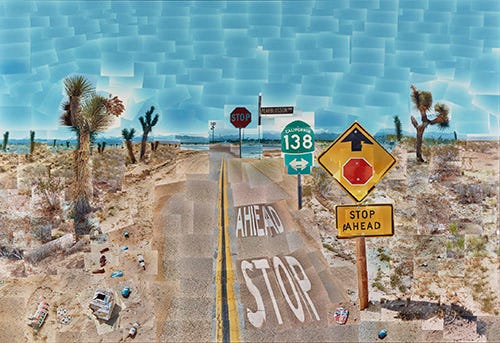
That doesn’t mean context has no value. I love David Hockney’s work without any explanation at all. But when he talks about his intentions, it deepens the experience and adds another layer rather than compensating for something missing.
The same is true of The Raft of the Medusa by Théodore Géricault.
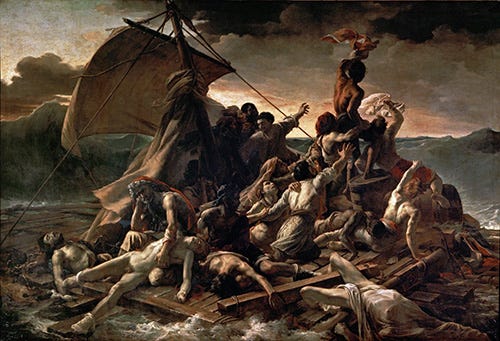
The Raft of the Medusa
Even if you know nothing about the story behind it, it’s a powerful painting, but once you understand what sparked it, the work becomes even richer.
I think Duchamp would have agreed with your larger point. You said “When [Duchamp] presents a urinal as art, the idea displaces the visual experience.”
But when Duchamp presented that specific urinal as art, in that particular time and place, the idea didn't displace the emotional experience. Duchamp wanted people to be startled, even shocked, and they were. He wanted to shock those viewers into considering new ideas about what constituted art, and he succeeded. Those ideas are passé now, but a hundred years ago they were new and fresh.
The urinal *now* doesn't evoke any of those emotions. Duchamp himself said that the urinal was no longer art and that putting it in an art museum was absurd because its only enduring interest was as a _historical_ object.