
Magicmaker
With Alan Dean Foster and Barclay Shaw

In 1996 and 1997 I worked on a video game project with Barclay Shaw and Alan Dean Foster in Palo Alto, California. The company was called MagicMaker, and the game The Marexx. Alan originally wanted to call the game The Matrix, but that name was already taken for another project. I wonder what ever became of that?
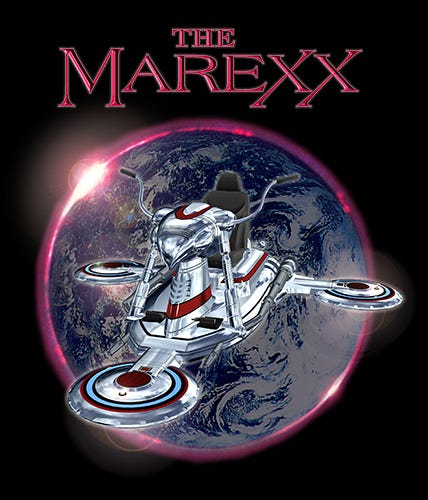
The CEO of MagicMaker, Michelle Kraus, had worked for several Silicon Valley companies before deciding to start one of her own. She came up with an innovative concept for a game in which players could shape the narrative. Alan, a noted science fiction writer, was brought in to build the story, while Barclay and I handled the visuals. Alan created 5 different worlds for the game: Builders World, Nurturer’s World, Paladin’s World, Shapemaster’s World, and Sleeper’s World.
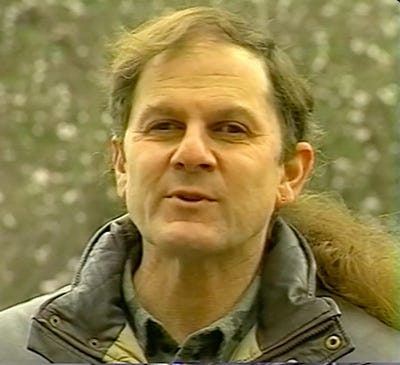
Alan Dean Foster
The player would wander through the various worlds, picking up information along the way. What made the game groundbreaking was the idea that players could change events as they happened, pushing the story in completely different directions. Most games at the time followed a fixed path, with very limited room for variation. It’s the kind of concept that could probably be realized today with AI, but back then it was simply too far ahead of its time; so much so that it ultimately didn’t work.
Barclay was a friend from before, and I knew him back when I lived in Los Angeles and he lived on the east coast. We were both artists and I admired his work, so I assume I met him at a sci fi convention when I was first starting out. His career pretty much mirrors mine, with our first covers appearing around the same time. We both did covers for Cinefantastique Magazine at the start of our careers, and did a lot of work for Del Rey Books.
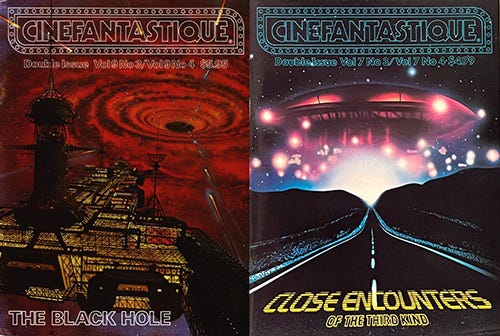
Mattingly Shaw
We also both did covers for Alan’s books.
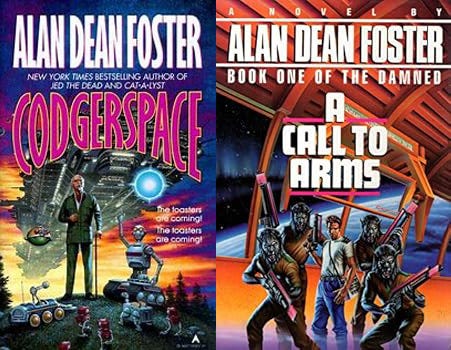
Alan Dean Foster covers
During the course of the months that we worked together on the video game, Barc and I became very good friends. He continues to be one of my closest confidants today. We both listened to Books on Tape, now Audible, while we worked, and we used to trade tapes between us so we could listen to twice as many books.
At the time, I was teaching at the School of Visual Arts in New York. When Michelle tracked me down, I agreed to join the project on the condition that I could fly back each week to teach my class. In practice, that arrangement didn’t work out as well as planned. I missed more than a few classes, and eventually Donato Giancola took over the course. Since both Barclay and I lived on the east coast, and MagicMaker was on the west coast, so we did a LOT of flying.
I should also admit I had certain unrealistic expectations for the project. My father, John W. Mattingly, had a huge success when he invented the “Waterpik,” at about the same age as I was then. I think, consciously or not, I hoped MagicMaker would be my Waterpik, my big success, just like my dad. I felt that this was going to be the culmination of all the work I had done before. Because of that, I threw myself into it completely.
Barclay and I both had apartments in Palo Alto, but we practically lived at the Magicmaker studio, working day and night to get the project off the ground. We created 3D environments for each of the worlds since it was important that the players be able to move around and explore. We farmed out the worlds to other artists to build, and hired an extraordinary storyboard artist, Chuck Pyle, to work out all the possible branches of the game. Everyone thought the game was in great shape, and we felt we were ready to show the world what we had done, and raise more money to turn it into a marketable product.
Our CEO rented out The Exploratorium in San Francisco for our big reveal and stocked it with computers so the attendees could play the game with us. We had an incredible turnout--the Wall Street Journal, The Los Angeles Times, lots of movers and shakers in the industry and venture capitalists. The whole affair was catered, and Michele flew my wife, Cathleen, out for the event. We all thought this was the big moment. We hoped we would be hailed as the new masters of the medium, and the audience would rise to there feet, give us a standing ovation and say ”they did it, by George, we HAVE to get some of our money invested in that company!!” Then it started, and the 3D figure of the Builder got stuck in a three-second dancing loop and stayed there for the entire demonstration. The servers were immediately overwhelmed and crashed, leaving only that loop playing over, and over, and over. Alan Dean Foster vamped, trying to imply that the motion was all part of the story, hoping someone would figure out what had gone wrong. No one ever did. We all felt depressed.
Michele, to her credit, recovered quickly from the disaster, and rallied the troops to figure out what went wrong. There wasn’t much Barclay and I could so, since the problem was on the technical side. Neither of us are coders, so we just kept working on the game. Barclay and I had worked like dogs, preparing something like 50 full backgrounds and 30 or so animations. After a couple of months of studious work by everyone, Michele felt that the kinks had been figured out, and we were ready to show our work. We also desperately needed to raise some money! Michele decided to take out a prime spot in Demo 97, the premier conference for the technology elite.
It was meant to be (again) our “big moment.” Barclay and I manned the Magicmaker booth along with Eleni Tsaprailis Vargis, the marketing director for the company, and talked up our demonstration the next night.
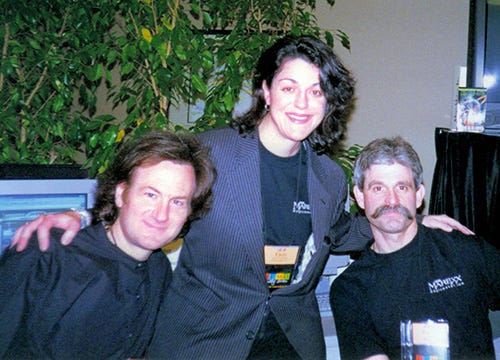
David, Eleni and Barclay at Demo97
In order to overcome the technical problems that ruined the first event, the tech people developed a new technique to pre-stress the server so that we could see what happened under the loads the actual event would induce. We tried to anticipate everything that could go wrong and create a fallback position so that nothing would stop the show. The room looked beautiful--big rear projection screens, good food, free drinks, great sound system. Barclay and I greeted people at the door and pointed them toward the computers spread around the room so they could join in. As the time got closer, Barclay and I looked at each other and said “We have DONE it, this is going to be the triumph MagicMaker needs!!!”
Unfortunately, the technical problems were still not worked out, and the servers were immediately overwhelmed again. The exact same thing happened as at The Exploratorium, with the Builder endlessly dancing the same 3 second loop. Alan vamped again, gamely trying to imply the weird dance was all part of our plan. At that moment, we both knew the project was finished. The next day I saw one of the attendees at the demonstration who had dropped by our booth the day before, and he looked at me and said “For the life of me I have no idea what you guys were doing“.
Sadly, that was the final nail in the coffin for MagicMaker, and it shut down soon after. Alan had a contract with Del Rey Books to write novelizations of the Magicmaker worlds. He actually completed three of them, and Barclay and I did the cover for the Builder world. When Magicmaker went down, the books were cancelled, so this is the only place you will ever see the Builder’s World cover.
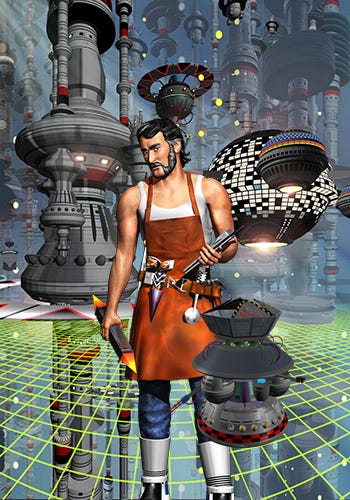
The company had burned through about a million dollars—with nothing to show for it but a dancing Builder stuck in time. Barclay and I had created a vast amount of visual material for those worlds, but in the end, only that three-second loop was ever seen.
Where’s all that art? Can you show us some?